

A new study highlights Sri Lanka’s continuing problem with pesticide suicides, identifying two pesticides that are responsible for more than three-quarters of deaths from pesticide self-poisoning.
Warning: this article contains content about suicide that some people may find upsetting. For help and support, visit www.findahelpline.com.
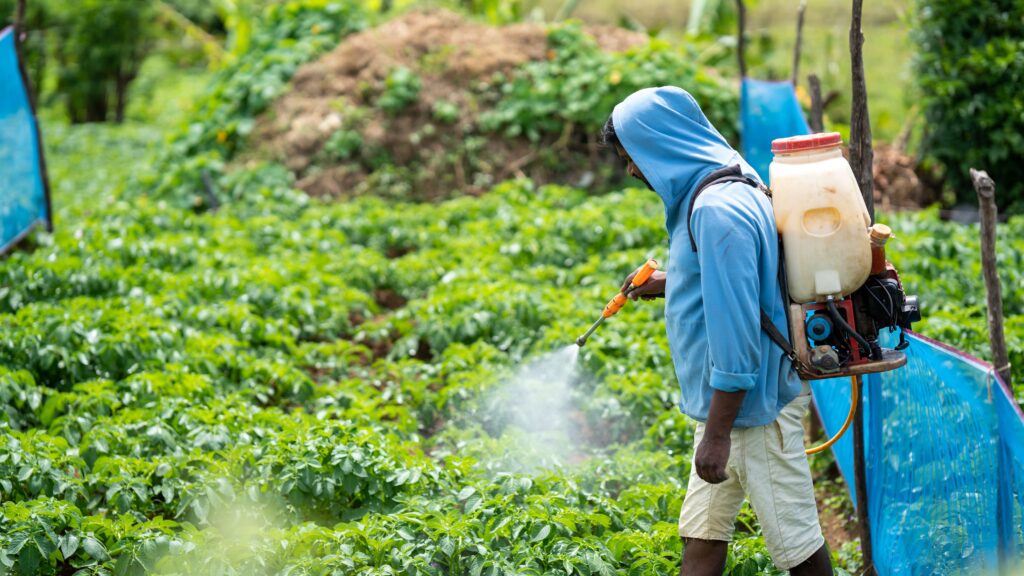
Sri Lanka has previously been extremely successful in preventing suicides by limiting access to a number of highly hazardous pesticides. However, despite this progress, pesticide poisoning remains the second most common method of suicide in the country.
Ongoing data collection and surveillance is essential to identify key pesticides responsible for deaths and inform future evidence-based action.
Research process and findings
The study team collected suicide surveillance data across six rural districts in Sri Lanka. Of the 1,040 confirmed deaths recorded during the study period, 236 (22.7%) were a result of pesticide ingestion.
Researchers then used police and coroner records to identify the particular pesticides involved. Where this information was unavailable in official records, they sought permission to interview families of the deceased.
The research identified carbosulfan and profenofos as the pesticides most frequently involved in fatal self-poisoning. Together, the two compounds accounted for 76% of pesticide suicide deaths. Carbosulfan was responsible for the majority, accounting for 65% of these deaths.
Pesticide bans shift patterns of suicide
In their analysis, the researchers explain that the two compounds emerged at the pesticides most commonly involved in suicides following bans on five other pesticides that had previously accounted for the majority of deaths.
Prior to these bans, carbosulfan and profenofos were responsible for only 6.9% of pesticide suicides between 2002 and 2008. However, the other five pesticides accounted for 78% of suicides.
The researchers suggest that this shift indicates method substitution. However, as these two pesticides are less toxic than the pesticides they replaced, the number of pesticide suicides – and the country’s overall suicide rate – has still fallen significantly.
Why this research matters
Responding to the findings, Dr Manjula Weerasinghe, Post-doctoral Fellow at Rajarata University, who led the research in Sri Lanka, said:
“These findings highlight the importance of maintaining surveillance systems to identify the pesticides responsible for suicides. Of the 1,040 confirmed suicides in our study, 236 involved pesticides. Our team of community-based researchers interviewed bereaved families of all individuals to collect detailed information about each event for further analyses. These interviews also helped us confirm the pesticides involved in 100 cases where this information was missing from official police or coroner reports. We hope this work will inform policies to further reduce pesticide suicides in Sri Lanka.”
Professor Michael Eddleston, Professor of Clinical Toxicology at the University of Edinburgh and Director of CPSP, who worked with Dr Weerasinghe on the project, said:
“Over the past few decades, Sri Lanka has had considerable success in preventing deaths from pesticide self-poisoning through targeted bans on highly toxic pesticides. However, our findings show that there is still more work to be done. Although the number of suicides has fallen considerably, partly because the pesticides that remain available are less toxic, we are still seeing far too many preventable deaths.
“This research provides policy-makers in Sri Lanka with important evidence to guide further action. We can now clearly see which pesticides are most responsible for deaths. Hopefully, these findings will help inform further regulatory action, with harmful pesticides replaced with safer alternatives.”
Occupational pesticide poisoning
In addition to suicide surveillance, the study examined acute occupational pesticide poisoning among 1,200 agricultural workers who regularly sprayed pesticides.
Based on self-reporting, profenofos was identified at the leading cause of acute poisoning, accounting for around one-fifth of cases in which a specific pesticide was identified.
These findings further support the need to promote lower-risk or non-chemical pest control approaches, as well as strengthening clinical management of acute pesticide poisoning.
Further information
The study was undertaken as part of the NIHR RIGHT4: Preventing Deaths from Acute Poisoning in Low-and Middle-Income Countries global research project, with support from the Centre for Pesticide Suicide Prevention (CPSP).
The views expressed are those of the author(s) and not necessarily those of the National Institute for Health and Care Research (NIHR).
The findings are published in Clinical Toxicology.
Read more
CPSP welcomes global action on a deadly farming pesticide
Reflecting on three decades of work to prevent deaths from pesticide self-poisoning